If you’ve ever checked your propane tank on a hot South Texas day and thought,
“Why does this look different than yesterday?” — you’re not alone.
We get calls about this every year once the heat starts picking up.
The short answer:
Most of the time, nothing is wrong.
Here’s what’s actually going on.
Heat Changes Tank Pressure (That’s How Propane Works)
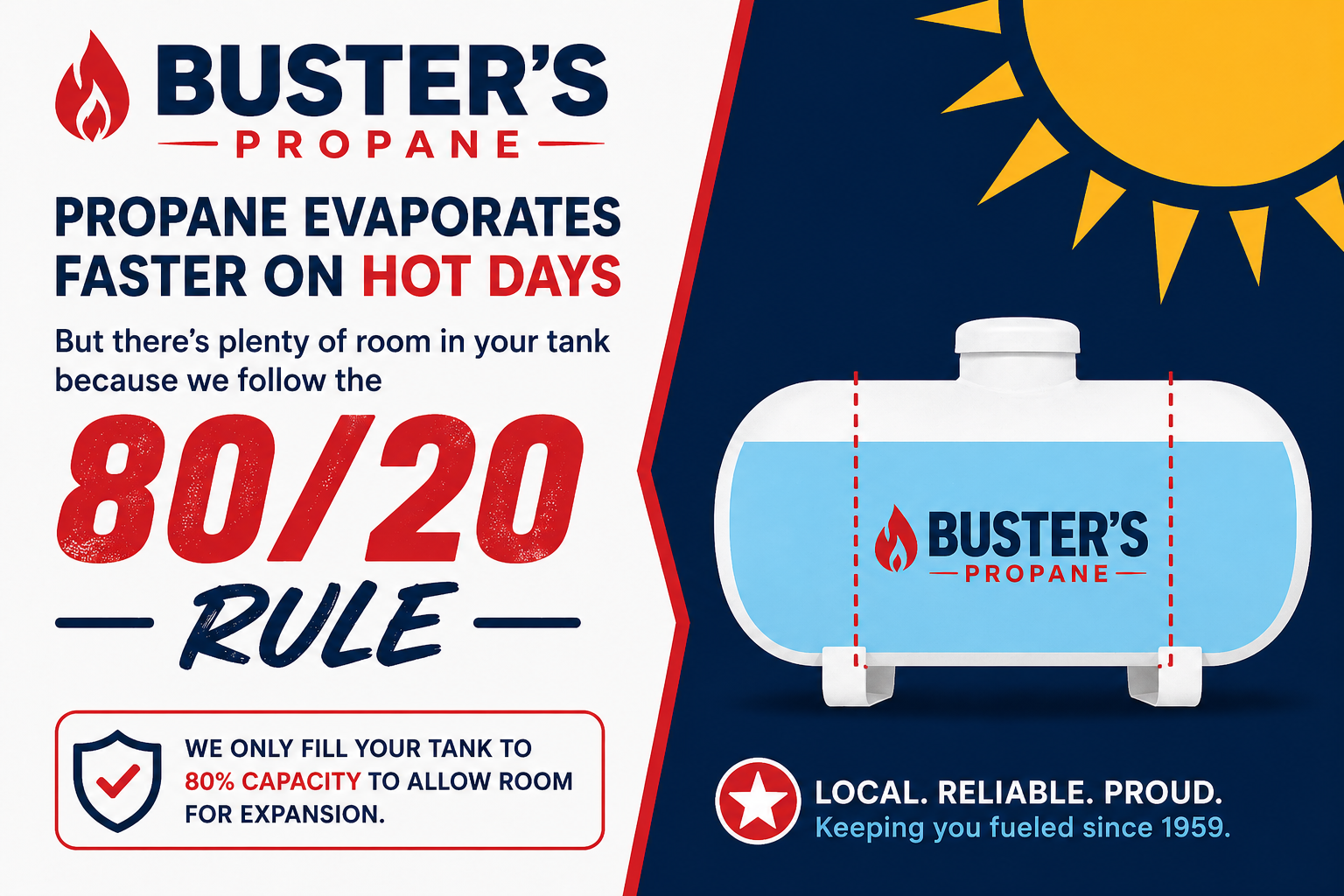
Propane is stored as a liquid inside your tank, and temperature plays a big role in how it behaves.
When it gets hotter outside:
- The propane expands
- Tank pressure increases
- Your gauge may read slightly higher
When it cools down:
- The propane contracts
- Pressure drops
- The gauge may read lower
So if your tank looks “fuller” in the afternoon and lower the next morning, that’s completely normal—especially here in South Texas where we can swing 20–30 degrees in a day.
Your Gauge Isn’t a Perfect Measurement
Another thing to understand—your tank gauge isn’t a precision instrument.
It’s there to give you a general idea of how much propane you have left, not an exact reading down to the gallon.
Things that affect your gauge reading:
- Temperature changes
- Time of day
- How recently propane was used
- Tank size and placement
That’s why we always tell customers:
Don’t watch the gauge hour to hour. Look at the overall trend.
Why This Is More Noticeable in South Texas
In other parts of the country, temperature changes are more gradual.
Here, it’s different.
- Hot afternoons
- Cooler mornings
- High humidity
- Direct sunlight on tanks
All of that can make your tank readings move around more than you might expect.
It doesn’t mean you’re losing propane—it just means the conditions are changing.
The Only Number That Really Matters: 20%
Instead of worrying about small changes, focus on this:
Don’t let your tank drop below 20%.
That’s the point where:
- Pressure can start to drop off
- Appliances may not perform as well
- You run a higher risk of running out
If you’re on a Keep Full schedule with Buster’s Propane, this is handled for you automatically.
When You Should Call
Most fluctuations are normal, but there are a few situations where you should reach out:
- You smell gas
- Your gauge drops suddenly and doesn’t recover
- Appliances stop working properly
- You suspect a leak
If something feels off, it’s always better to check it out.
Bottom Line
Your propane tank reacting to heat isn’t a problem—it’s just physics.
South Texas weather makes it more noticeable, but in most cases, your system is working exactly like it should.
If you ever have questions about your tank, gauge, or propane system, the team at Buster’s Propane is here to help.
Need Help or Want to Get on Keep Full?
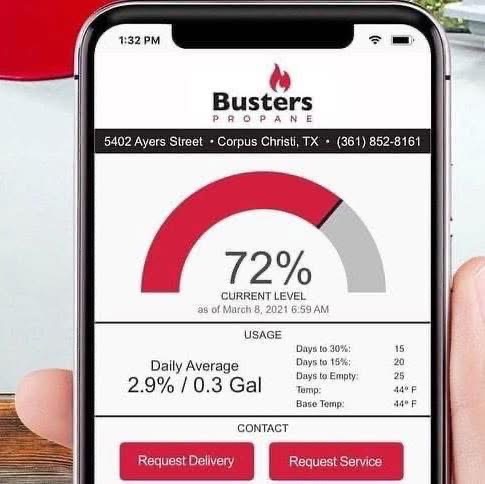
If you’d rather not think about tank levels at all, ask us about our Keep Full service and tank monitoring options.
We’ll keep an eye on it so you don’t have to.